New Synagogue of Szeged – A Visual Study
Filming architecture through movement and light
This short film explores the New Synagogue of Szeged from a cinematographer’s point of view. The building leads the visual rhythm. Camera movement follows structure, symmetry and light rather than narrative direction. Every shot responds to the space instead of shaping it.
I approached the location as a living environment. I focused on balance, scale and transitions between light and shadow. Slow movement replaces spectacle. Static frames allow architectural details to breathe without visual pressure.
This way of working appears across several location-driven projects in my visual archive, where architecture plays an active role in the storytelling.
Interior spaces and visual restraint
The interior demanded a controlled visual language. I avoided wide coverage in favor of deliberate framing. Light dictated timing and lens choice. Natural illumination defined contrast and depth throughout the shoot.
Each camera position respects the geometry of the space. The lens never dominates the environment. Movement stays minimal to preserve the sacred atmosphere. This approach keeps attention on form, ornament and spatial flow.
Architectural projects often start with careful planning and location study. For collaboration details and availability, visit the project inquiry page.
Context and architectural presence
The New Synagogue of Szeged stands among Europe’s most significant synagogue buildings. Completed in the early 20th century, it combines secessionist, historicist and Gothic elements. These contrasts strongly influence the visual character of the film.
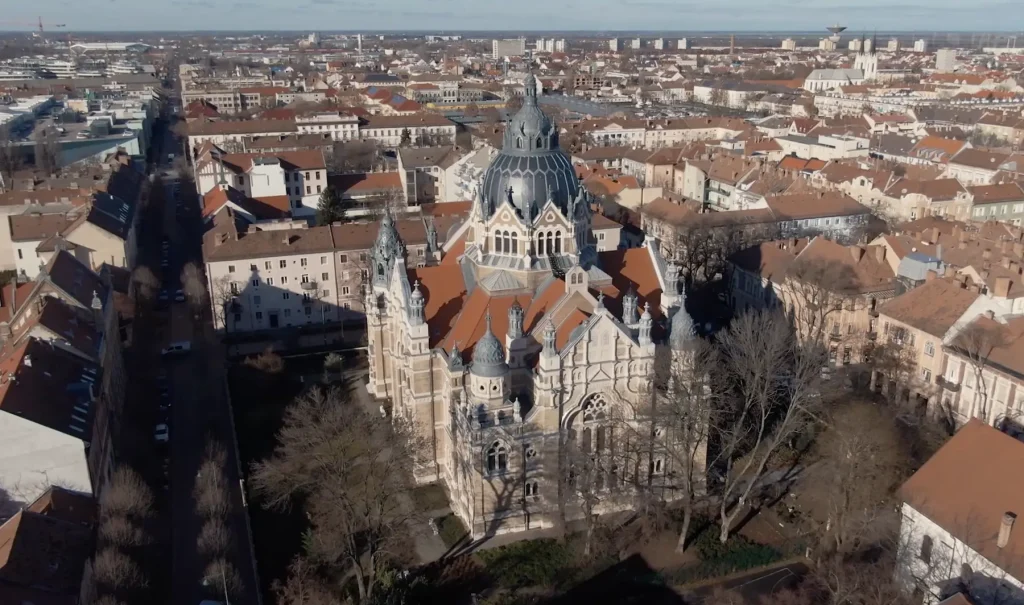
Aerial shots establish the building within the city. Interior sequences move inward and slow the pace. Together, these perspectives connect exterior scale with interior intimacy.
For historical background and visitor information, see the official site of the New Synagogue of Szeged.